
ETFE Foil: A Guide to Design
by on 11th January 2022
ETFE
ETFE or ethylene Tetra Fluoro Ethylene is now established as one of the most exciting materials in today’s design industry and architects, contractors and clients are becoming increasingly aware of the potential it offers.
Originally invented by DuPont as an insulation material for the aeronautics industry, ETFE was not initially considered as a main-stream building material, its principle use being as an upgrade for the polythene sheet commonly used for green house polytunnels. It wasn’t until the early 1980s, when a German mechanical engineering student investigated it in his quest for new and exciting sail materials, that its use was reconsidered. Although discounted for the original purpose, he saw its strength, high light transmission and structural properties as an advantage to the construction industry and started to develop the systems we see today.
Over the past thirty years, there has been an increased awareness of the material and its uses and it is now specified by architects and designers across the world on a wide range of projects – from schools and offices, to government buildings and sports facilities.
ETFE is under the architectural spotlight and intends to shine.
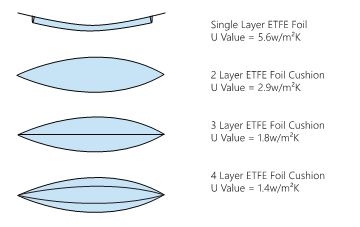
An extremely thin membrane, ETFE copolymer is extruded into thin films (or foils) which are used in two ways; as a single layer membrane supported by a cable system or as multi-layer cushions supported in an aluminium perimeter extrusion which, in turn, is supported by the main building frame.
ETFE cushions are kept continually pressurised by a small inflation unit which maintains a constant pressure and gives the foil structural stability and some insulation properties.
While a single ply ETFE membrane has an approximate U value of 5.6 w/m²K and provides little more than a barrier to the outside world, a multi-layer ETFE cushion can offer a good level of insulation and therefore is often used as part of the architecture of mainstream spaces.
The thermal qualities of ETFE cushions can be improved by adding more layers of foil to create additional pockets of air.
ETFE foil is a naturally translucent material and transmits light across the entire visible light region (380-780nm). A single layer of medium weight ETFE has a light transmission of approximately 90-95% light transmission, with only a small reduction when multiple layers are added.
Transmission across the ultraviolet range (320- 380nm) is also very good (approx. 83-88%) and therefore provides an environment where plants and vegetation can thrive. It is also important to note that the film absorbs a large proportion of infra-red light transmitted, a quality which can be exploited to improve buildings energy consumption.
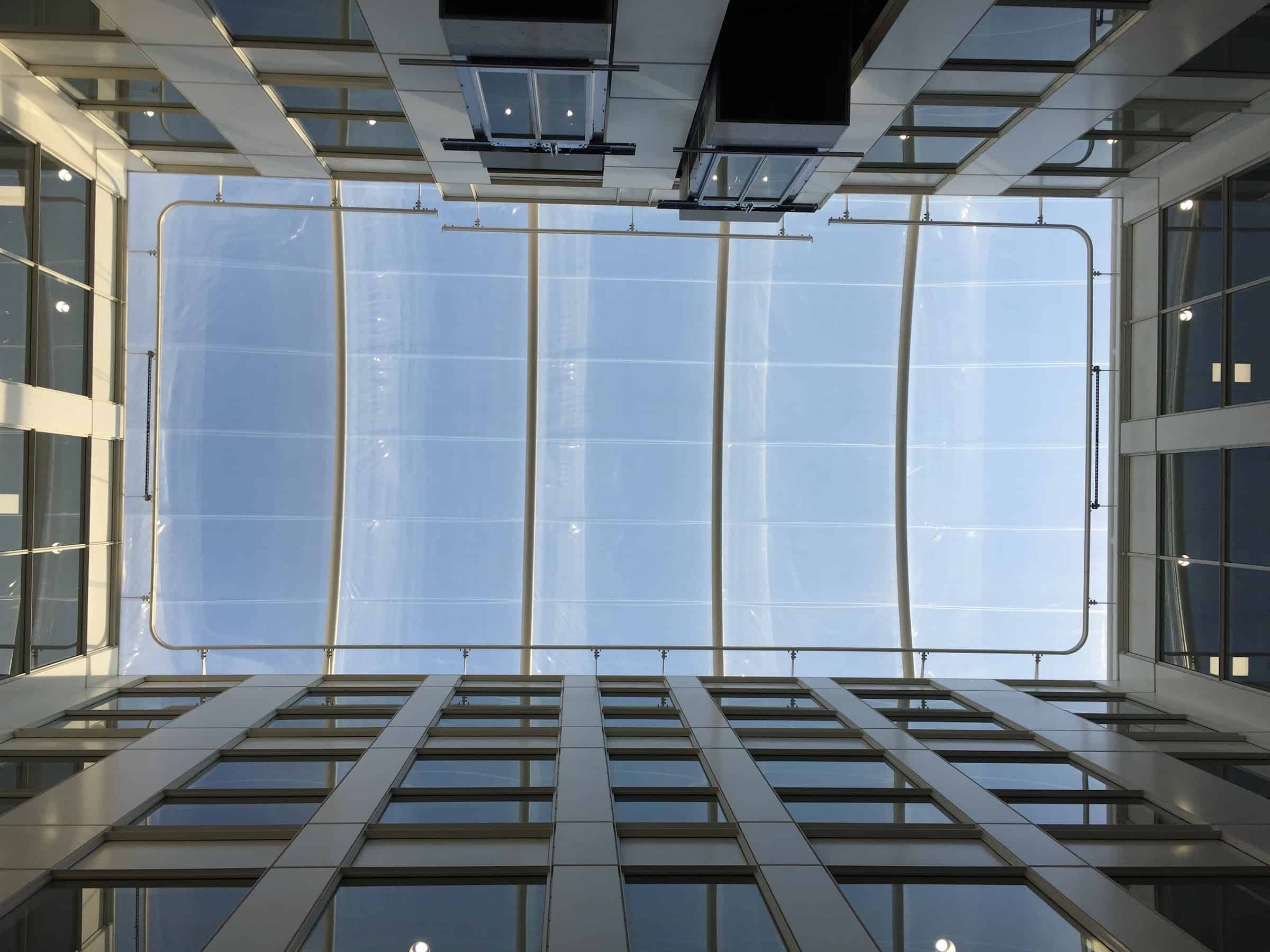
As a naturally translucent material, when used in a multi-layer cushion an ETFE roof can contribute to natural solar gain within the space below.
G value is the term used to describe the increase in the temperature of a space due to sunlight/solar radiation. This solar gain is generally desirable in winter, due to the passive heating effect the space will have as a result of the sun, and undesirable in summer due to overheating as the space will require additional cooling measures.
The G value of an installation is usually expressed as a percentage or a value between 0 & 1; the higher the number, the more energy is being transmitted through the ETFE foil and the more the building will heat up.
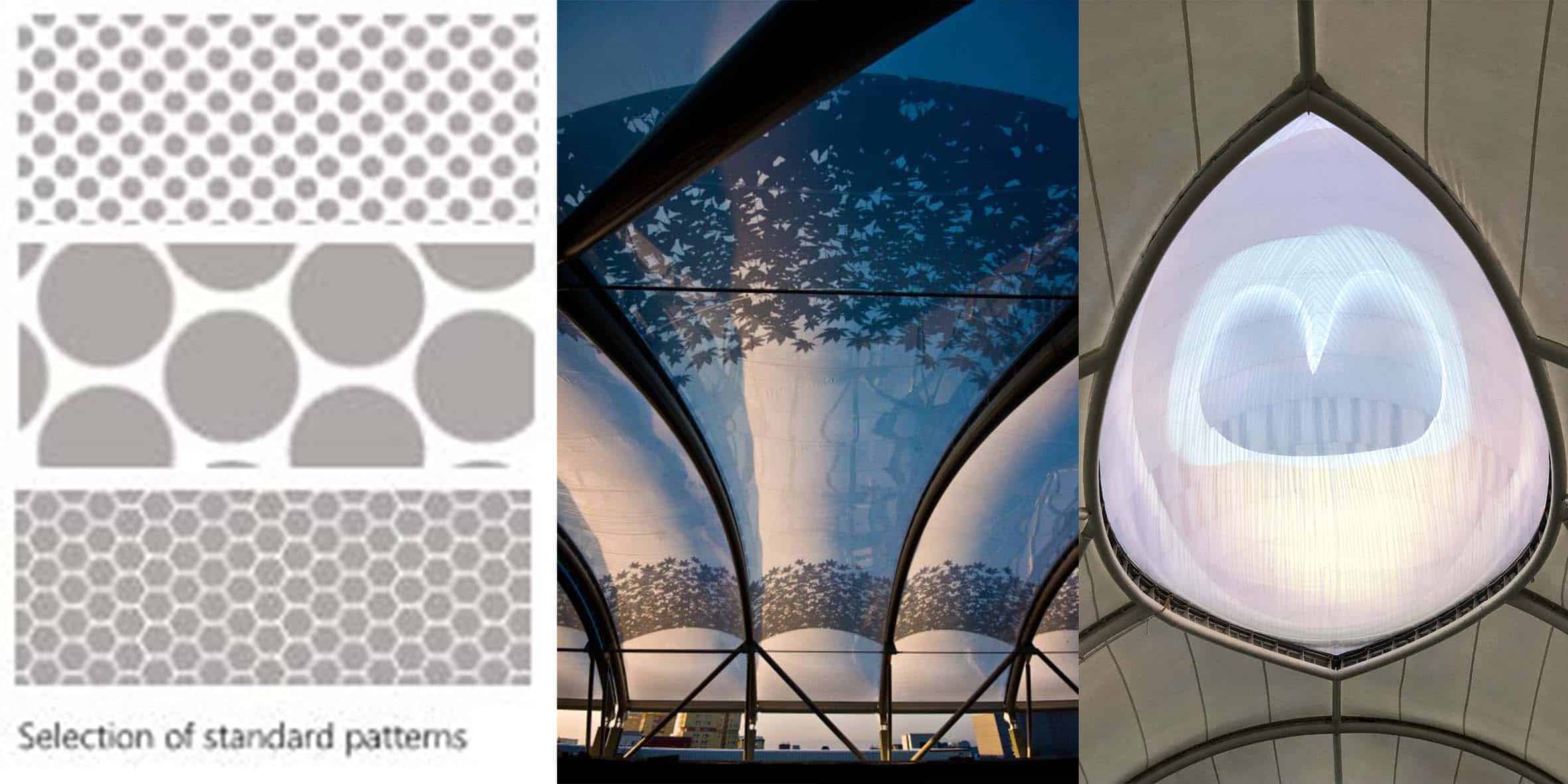
In order to reduce this and to control any glare within a space, ETFE foil can be treated in a number of ways to manipulate its light transmission properties and reduce the solar gain. These include adding fritting to the top layer of the ETFE foil, using white or matt diffused ETFE foil or using tinted ETFE foil specifically designed to reduce solar gain.
Using a specialist printing method, the surface of the ETFE foil can covered with a silver pattern to reflect light transmission and reduce solar gain while retaining visual translucency. By varying the percentage of coverage and density of the ink, the energy and light transmission can be altered. We offer a standard range of fritting patterns to achieve this variety of light transmissions and for clients with very specific performance or aesthetic requirements, it’s also possible to have custom patterns.
ETFE cushion systems get their structural stability and ability to withstand weather conditions through pneumatic pressure (around 250-300pa). As a result, every ETFE cushion system is continually connected to an air handling unit from which air pipes run to each individual cushion. As the cushions only need to maintain pressure and not generate air flow, the energy consumption used by these units is minimal (approx. 60 – 120W max.). An entire roof is generally powered by a single air handling unit; for large installations (2,500sqm and upwards) multiple air handling units are installed and networked together to allow load sharing.
Each air handling unit contains 2 fans powered by electric motors; the fans run alternately, with only one fan running at any given time. In the event of a cushion failure, adverse weather conditions or a drop in cushion pressure, both fans will run simultaneously to maintain a steady pressure.
A typical air inflation unit has a footprint of 1m x 0.5m and is located near to the ETFE cushion system, internally or externally. The system requires a dedicated and secure 240v power supply.
As standard our systems are supplied with:
» Industrial PLC controller with touch screen interface, data logging and full diagnostics
» LCD panel & traffic light indicators for local status
» Dual fans for load-sharing & redundancy
» Dehumidifier
» BMS interface to replicate traffic light system status
» Non-return valves to reduce air loss
» Inverter-driven fans to optimise efficiency
» Stock parts for quick replacement
Additional options include:
» Weather station for reactive pressure control
» Remote 3G monitoring via web interface
» UPS battery backup for control system
» Remote LED mimic panel
» Remote LCD control panel
As standard, our ETFE cushion roof systems are supplied with an advanced, active monitoring system. An LCD screen mounted on the inflation unit supplies real-time information on the pressure within the cushions and any faults within the operation of the system via a traffic light system:
Green light – all working fine
Amber lights – minor problem, needs attention (e.g. a partially blocked air filter)
Red – Immediate attention required
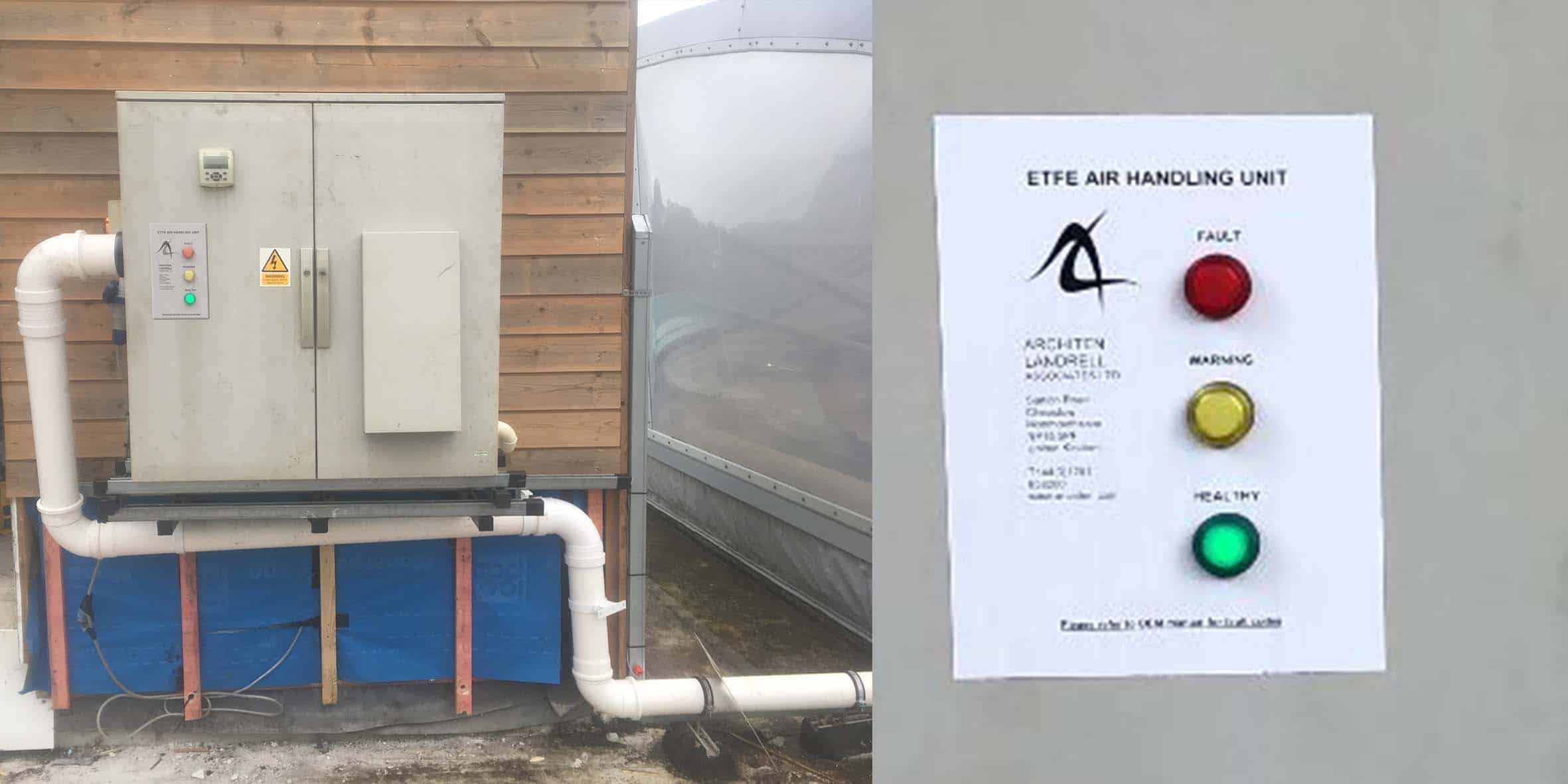
The control system monitors activity automatically and can adapt to avoid potential issues.
In the event of a problem the control system will automatically try to compensate for the fault; for example, when a drop in pressure occurs the rate of airflow to the cushions will increase. In addition, the fault is highlighted on the LCD display.
As an extra option, we can offer remote diagnostics which allow Architen Landrell (or a designated user) to gain access to the control system remotely. The remote view lets a user to see how the system is performing, assist with off-site updates or diagnostics in aid of fault finding and allow minor pressure and performance adjustments.
In the unlikely case of a power failure, the ETFE cushion system will maintain pressure for between 3 and 6 hours before deflating (dependant on weather conditions) due to the non-return valves built into the air inflation units. After this time, there is a possibility that, as pressure drops, the roof could become damaged by adverse weather conditions; as a result we recommend that there is provision for standby power to support the cushions should this situation arise.
Aside from this, we always recommend that the roof is regularly inspected and closely monitored to avoid predictable problems occurring.
One of the outstanding characteristics of ETFE foil is its exceptional tear resistance, lack of notch weakness and stress crack concentration. Any cuts and scratches initially propagate but the material rapidly stretches and rounds out into a tough low radius area that dissipates the loads and prevents further tearing.
Minor repairs to the foil, such as a puncture hole, can be carried out in situ and within a relatively short timescale.
If an ETFE foil cushion becomes more significantly damaged, an individual cushion can be easily removed and replaced with minimal disruption to the installation as a whole. The outside surface of the ETFE cushion can be accessed, using rope access techniques, from the main structural support. This would require the rigging of working ropes and is routinely done under
IRATA/BS 7985:2009 guidelines.
Where remote diagnostics are included within the system, every effort will be made to diagnose potential problem remotely. Once the problem is identified, it can be fixed in one of two ways:
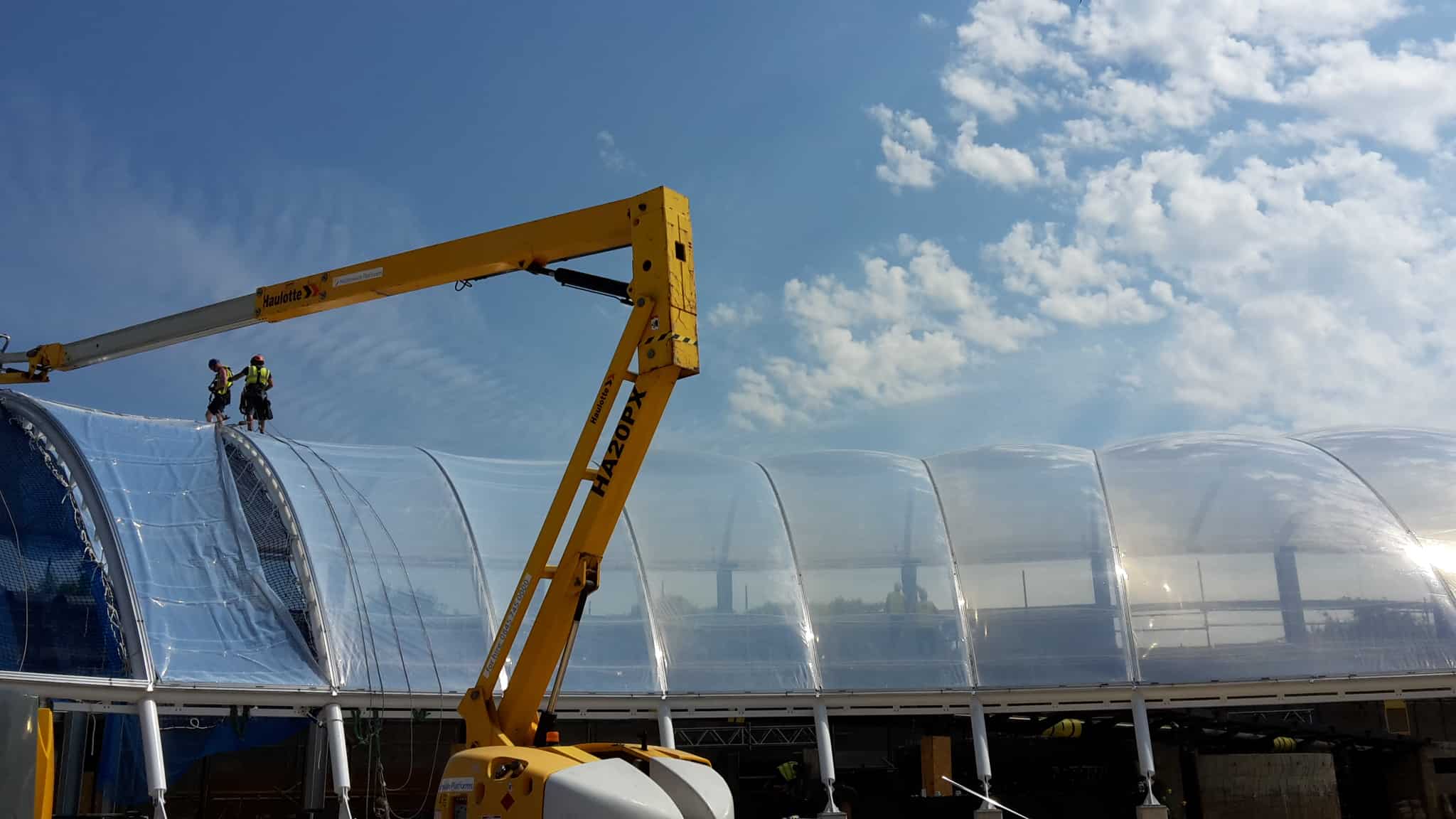
Unlike traditional fabric structures, ETFE Foil is an extruded material and therefore has a smooth surface. This smoothness reduces the amount of dirt retained on the ETFE foil surface and allows the rain to wash away the majority of bird droppings etc. As a result, ETFE foil roofs don’t need frequent cleaning, every 2-3 years is a good guideline. However, if a rain suppression layer has been installed the frequency of cleaning required may be increased.
As an ETFE foil cushion roof is dependent on its inflation, we recommend that the air handling units are serviced twice a year. An average inspection includes; checking for any visible damage to the ETFE cushions, visual and physical checks on the fixity of cappings, air delivery pipework, clamps, brackets and connections, operational testing of the air handling unit, replacement of filters, fine tuning the operation of the inflation equipment to maintain optimum performance and repair of any minor holes or tears.
Architen Landrell has a designated Maintenance Department which deals with planned and emergency works at sites across the world. In the event of an emergency, we also have a 24/7 dedicated telephone line for call outs and advice.
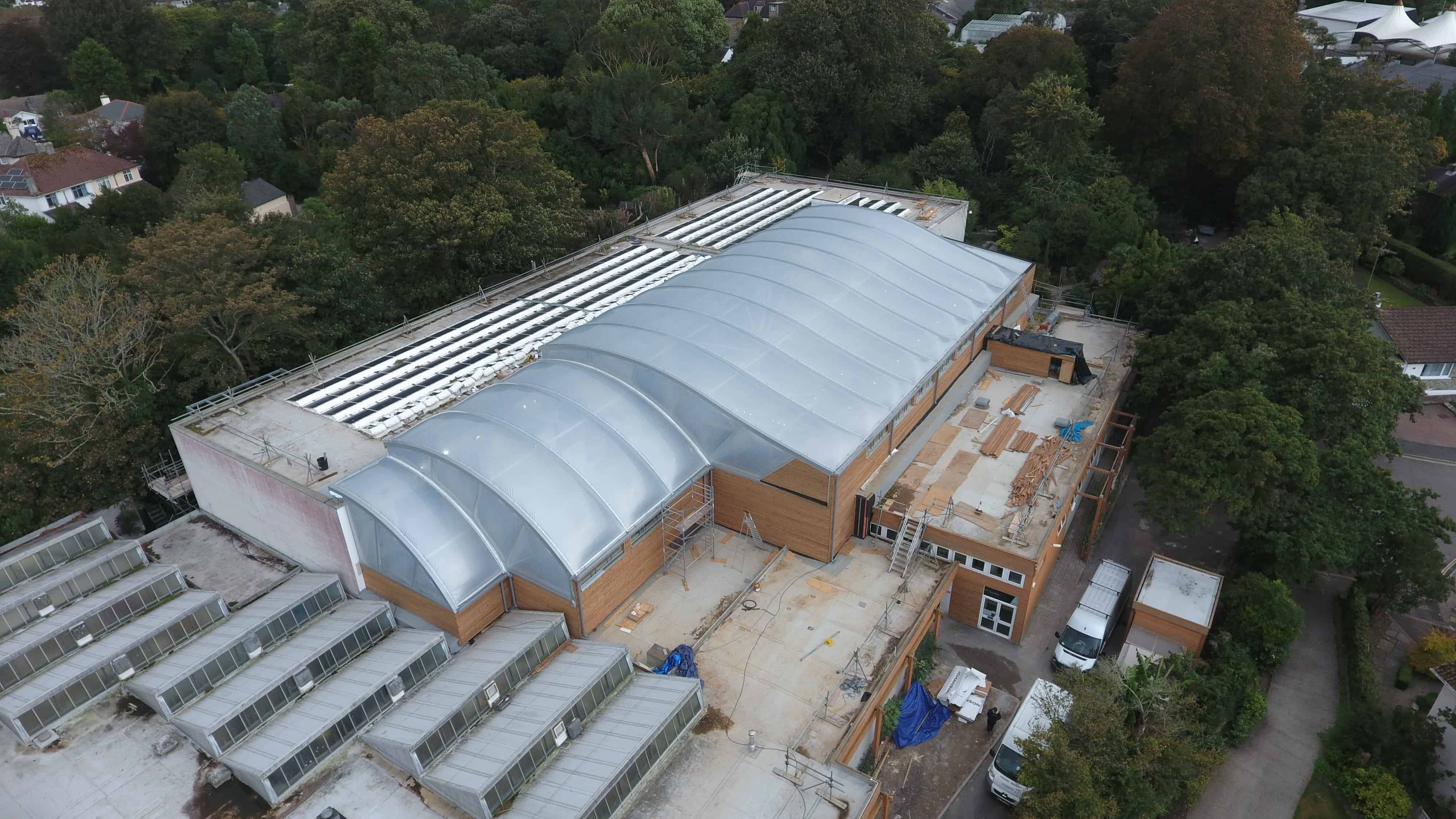
ETFE foil cushions can be manufactured to any size and to fit any shape. Size is limited by the wind and snow loading allowed for within the design and by the orientation of the cushions i.e. whether they are installed horizontally or vertically.
As a general design guideline, rectangular cushions can span up to 3.5m in one direction and as long as required in the other direction. For triangular cushions, the size can be greater than this. If design dictates that larger cushions are required, these can be created by reinforcing the internal and external layers of the cushion by cable restraints or by using thicker ETFE foil.
ETFE foil has an excellent life expectancy as it is unaffected by UV light, atmospheric pollution and other forms of environmental weathering.
While no ETFE structures have been in place for longer than 30 years to allow us to gain a true understanding of aging process of the foil, the material has been extensively researched and tested in a laboratory environment and out in the field. These tests have concluded that no degradation or loss of strength has occurred and there is no sign that the material will become brittle or discolour over time. As a result, it is anticipated that the material has a life expectancy in excess of 50 years.
ETFE Foil as a material has low flammability (270C) and is considered self-extinguishing. In the event of a fire, hot smoke will cause the foil to soften, fail and then shrink away from the fire source to create natural ventilation. The quantity of material used in the roof is not important in this situation – the foil will not create molten drips or any fumes.
ETFE foil has been comprehensively tested. This is a selection of the fire results:
DIN 4102 Class B1
EN 13501-1 Class B-s1,d0
NFP 92-505 M2
NFPA 701 Pass
Fire Performance
For more information on specific fire tests, please contact Architen Landrell.
In some cases, it is not possible to guarantee that smoke will reach the ETFE at a temperature which will cause the cushions to fail; therefore, it is worth considering the installation of automatic actuators in order to ventilate the space of smoke.
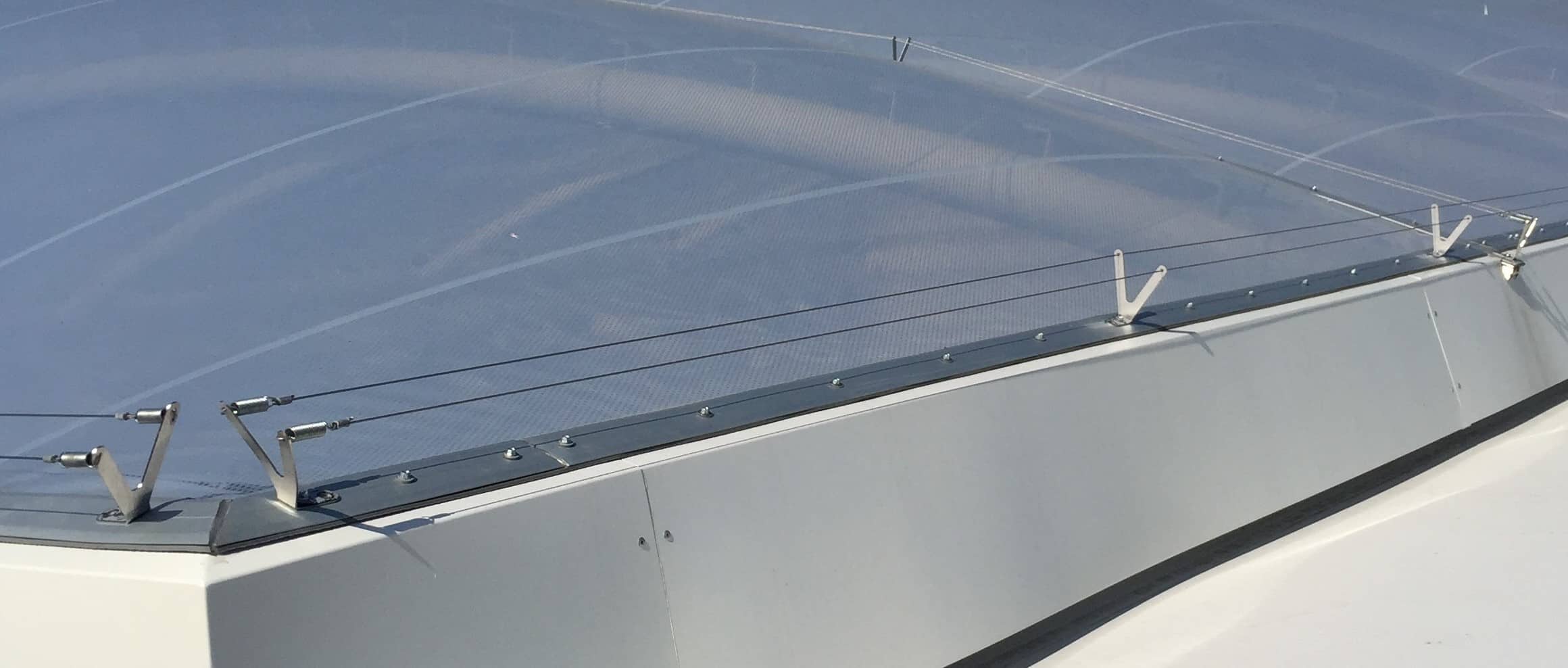
As a precaution to ward off birds, all Architen Landrell ETFE cushion systems are supplied with bird wire deterrent to stop bird perching on the extrusion/steelwork. Any damage caused by birds can usually be repaired without compromising the aesthetics of the ETFE cushions.
ETFE foil cushion systems are certified as class C non fragile roof assembly in accordance with ACR(M)001:200 – test for fragility of roofing assemblies.
Class C is the lowest class of non-fragile assembly and, particularly if engineered to pass the test criteria, may be close to the boundary between fragile and non-fragile. Its classification and use therefore requires the following to be taken into account:
ETFE foil roofing, in either single layer or cushion format, is acoustically transparent and will therefore offer no detriment or benefit to the acoustics of space.
With ETFE cushions, rain noise reverberated and reflected over multiple tensioned surfaces can sometimes make a space uncomfortably noisy. For this eventuality, we offer a rain suppression layer tensioned over the top surface of the cushions which acts as a dampener, stopping the sound reverberating around the space below and reducing noise levels by up to 10dB in heavy rain (Annex A of BS EN ISO 140-18:2006).
In general, the installation of a rain attenuation layer is only necessary in exceptional circumstances. This can be retro fitted to the ETFE foil cushion system and therefore we recommend that rain noise is assessed prior to making a decision to install.
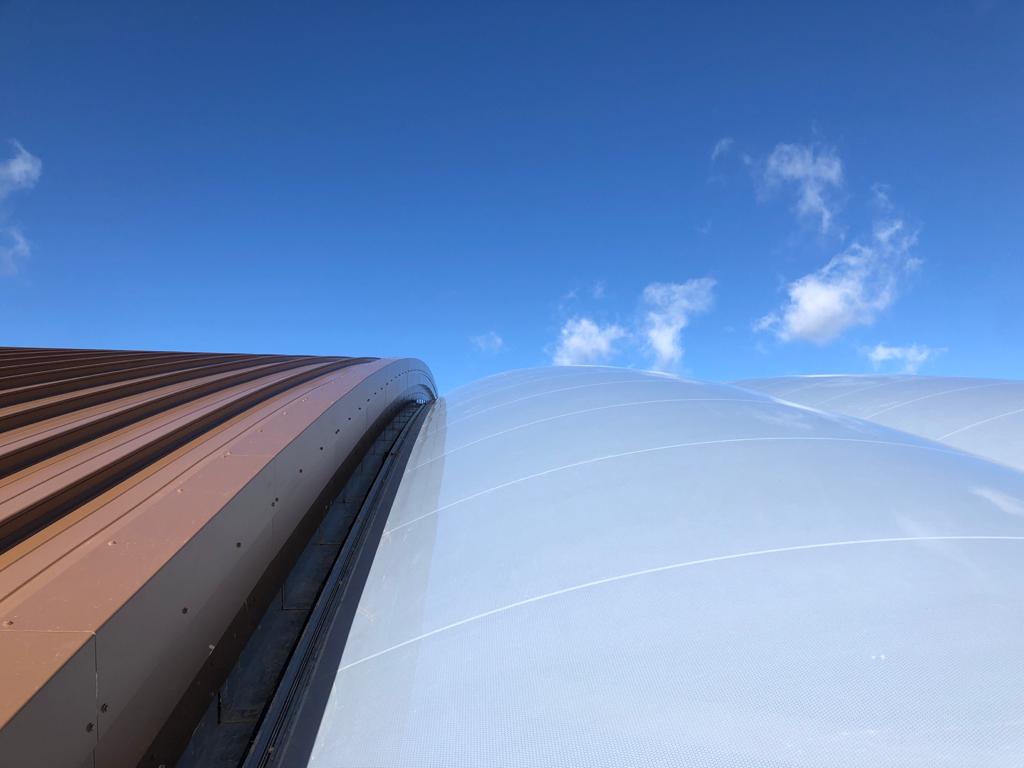
All ETFE structures are designed with curvature to ensure that rainwater and snow do not ‘pond’ or collate on the top of the membrane as can lead to deformation of the foil. Snow build up is encouraged to drain and rainwater will be channelled to the perimeter of the roof where it can be collected in the main gutter system.
As a general rule, we recommend that ETFE roofs are designed with no less than a 10 degrees slope at the perimeter of the structure. More shallow curvature can be achieved, but must be combined with snow sensors and/or cables to assist in extreme weather conditions.
Our ETFE systems are designed for each specific location and the local weather conditions which it will be exposed to – this includes areas where there are high levels of snow fall.
We mitigate the risk of snow sitting on the surface of the ETFE cushions in a number of ways:
– We engineer every structure to Eurocode BS EN 1991-1-3 for local snow loads
– If snow drift is a concern, we can adapt the thickness of the ETFE foil, the number of layers used and even add snow support cables to the underside of the cushions to assist.
– Our air handling units can be fitted with automatic snow sensors which can adjust pressure within the ETFE Cushions at high risk times.
The raw material associated with ETFE is a class II substance admitted under the Montréal treaty as it is not a petrochemical derivative and it does not contribute to global warming, as is the case for all materials used in the manufacturing process. The production of ETFE involves the transformation of the monomer TFE in to the polymer ETFE using polymerisation; no solvents are used in this water based procedure. The material is then extruded to varying thicknesses depending on application; a process which uses minimal energy. Fabrication of the foil involves welding large sheets of the ETFE; this is relatively quick and again a low energy consumer.
ETFE can be recycled with ease, but due to its properties (does not degrade under UV light, sunlight, weather, pollution) it has a very long life which is estimated between 50-100 years, making the need for recycling small. Excess material from the cushion manufacturing process can be recycled effectively by all ETFE suppliers. The aluminium frames do require a high level of energy for production, but they also have a long life and are readily recycled when they reach their end of life.
ETFE cushion systems offer both good insulation and translucency. The weight and size of the ETFE has added benefits making it much more energy efficient than materials with the same desired architectural effect. For example, transportation of the material is much easier as it can be rolled, taking up less space, hence the need for less conveyance.
The cleaning and maintenance of ETFE is also small, the majority of the time water will wash off any dirt, this is due to the smoothness and anti-adhesive properties of the material. If cleaning is needed then only light PH neutral detergents are used making the environmental impact minimal.
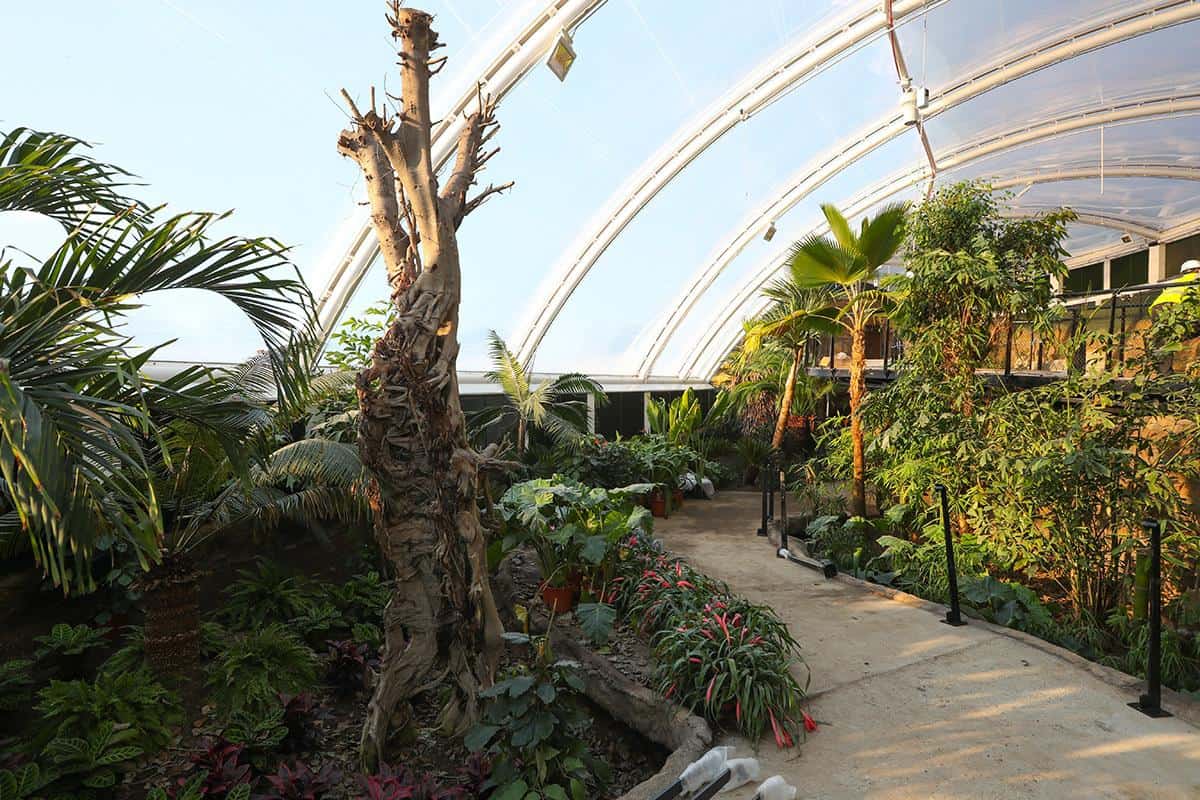
As an ETFE system offers a high level of light transmission, heat build-up can be a problem. It’s common for louvres to be installed around the vertical perimeter of the roof but when this is not possible, automated opening vents can be incorporated into the ETFE cushion system itself.
Actuated panels can be manually activated or sensors can be connected to the Building Management System to automatically open when heat levels get too high. In addition to air ventilation, opening panels can also contribute to the building’s fire strategy. In this case, this system is triggered by the fire alarm/temperature setting, which can open the hinged panels for smoke ventilation.
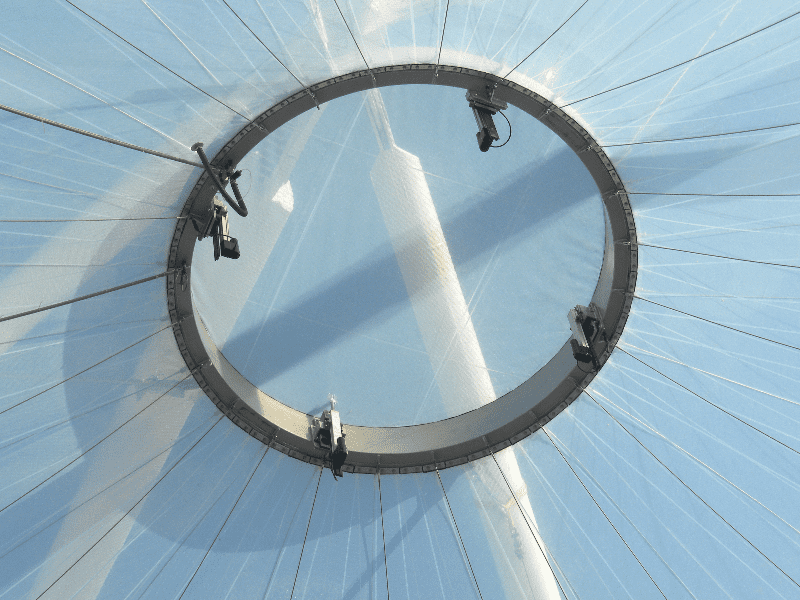
As a flexible material, ETFE Foil can take very high loadings for a short period of time which makes it an ideal material for use in locations where there is a risk of explosion. If vandalism is a threat, ETFE foil is also an advantage as the cushions will not break or fall from the extrusion frames if damaged.
Our ETFE foil cushion systems are supplied with a standard 5 year warranty. An extended warranty offering 10 years cover can be provided at an additional cost if requested.
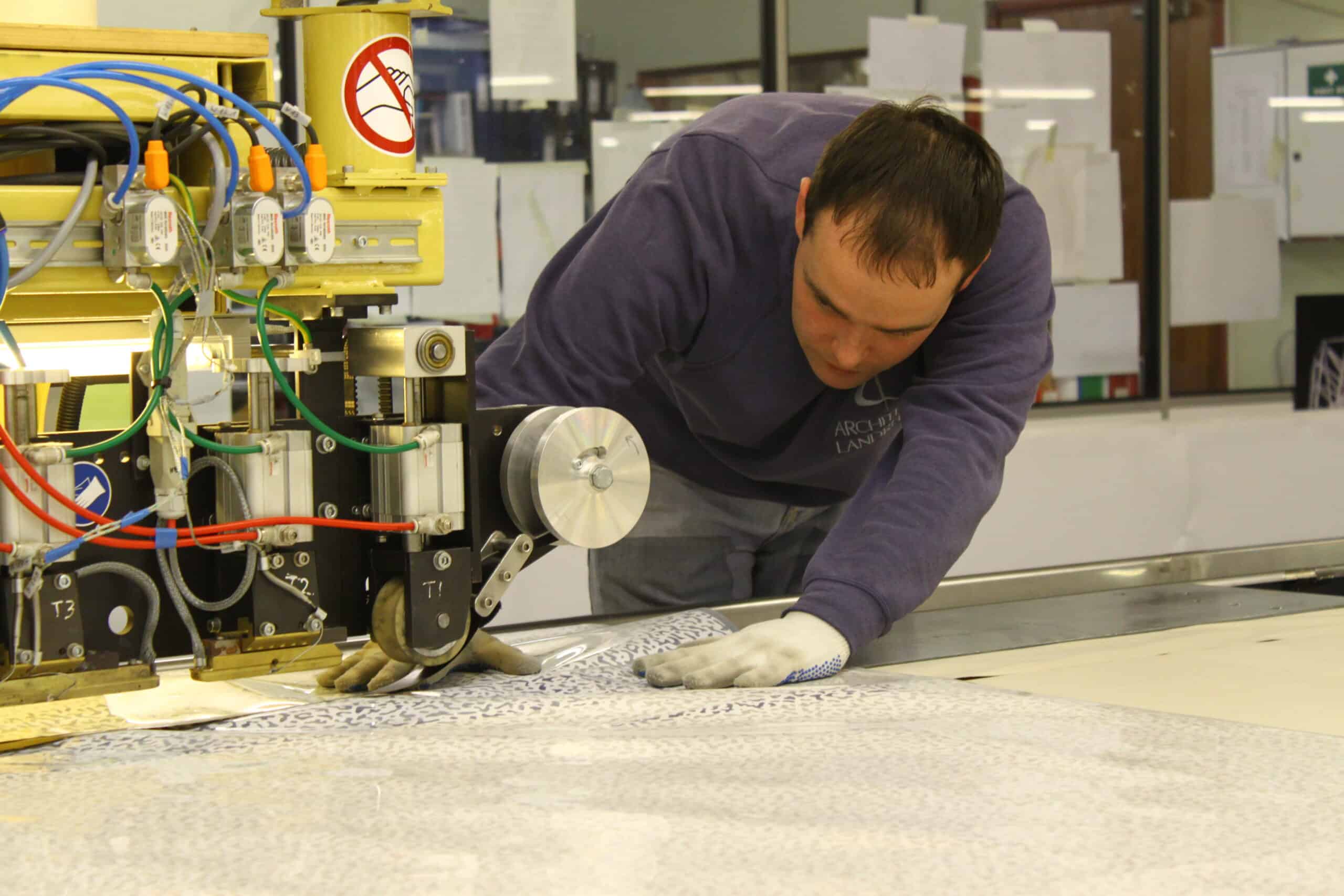
All of our ETFE foil cushion systems and single layer ETFE systems are manufactured in our purpose built factory. With two independent ETFE production lines we can fabricate up to 100,000 sqm of ETFE every year.
ETFE foil on the roll is sourced from only a small handful of suppliers to ensure high quality material. It arrives in our factory in Chepstow, UK is cut and welded into individual panels to suit each and every project. With full involvement in the production process, we can ensure the highest quality standards are adhered to at every stage.
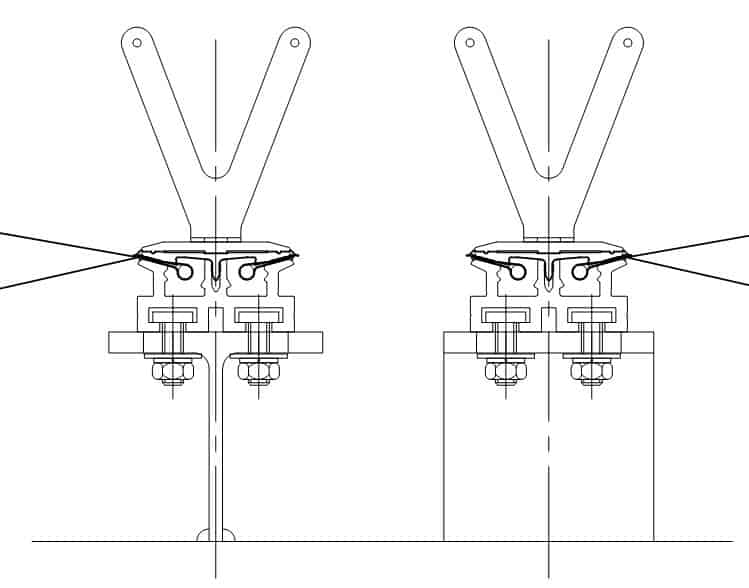
Below are a selection of our typical design details. If you’d like these in .dwg format or you’d like to discuss how your project can work, please give our team a call.
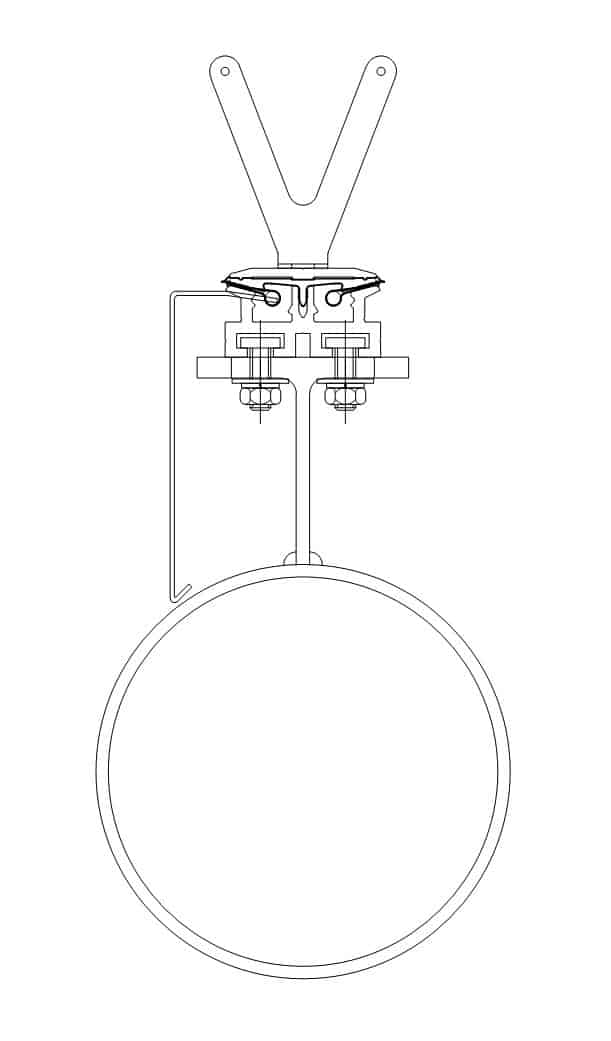
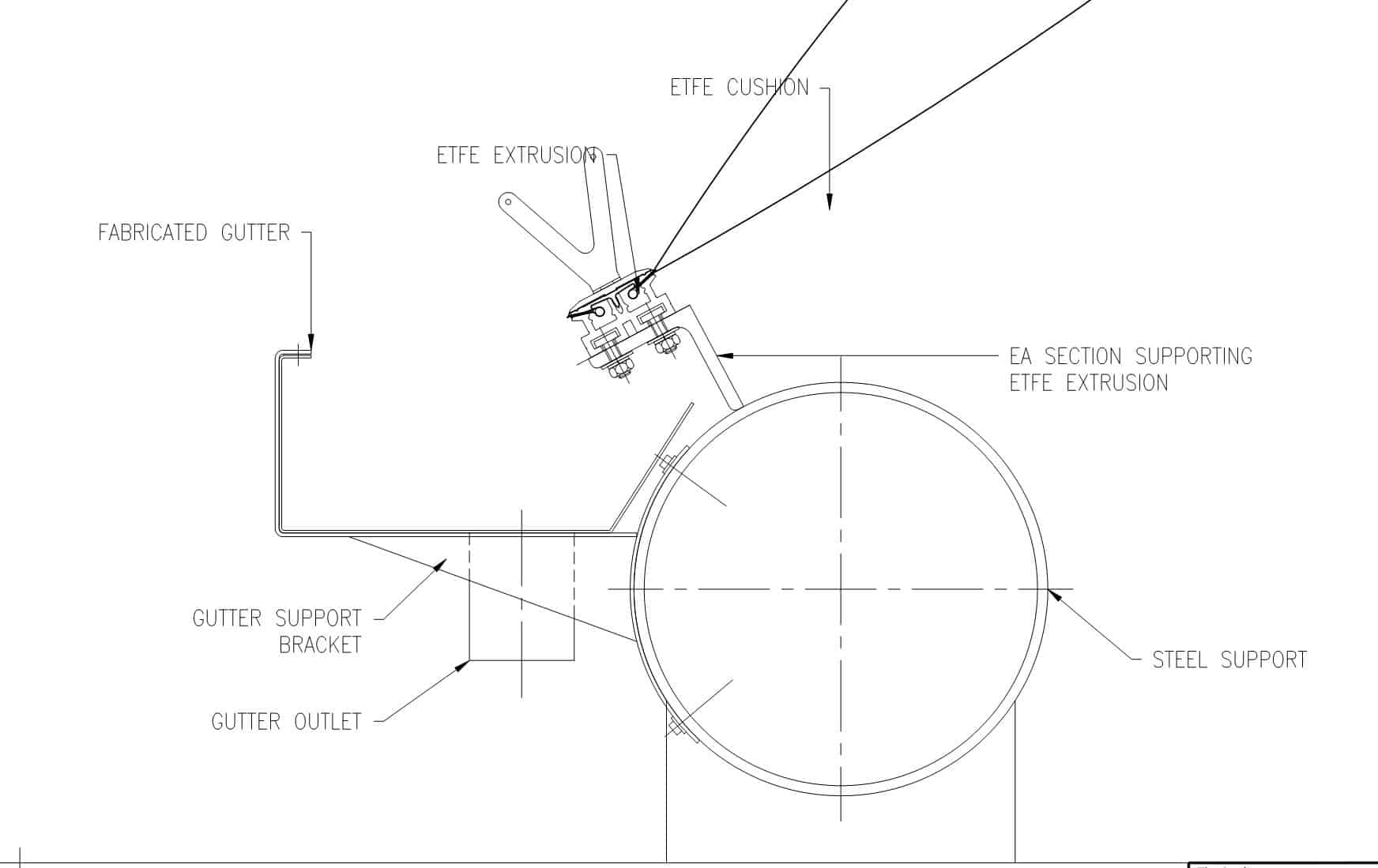
PLEASE NOTE: As part of our policy for continuous product development, Architen Landrell reserves the right to change any of the enclosed information without prior notice.

Other posts by Architen Landrell